link;
http://library.mothernature.com/l/herbs-for-health-and-healing/pain-inflammation_1041.html
excerpt;
Most of the herbs suggested for problems such as arthritis do little to fight the disorder itself, but they do reduce the pain, and if you suffer from arthritis, you know that is a big step. You must have patience—it can take anywhere from a week to a couple of months for you to notice any improvement, but the results can be dramatic. Sometimes the herbs help increase mobility of arthritic joints. In the most serious cases, herbs have at least enabled people with arthritis to reduce the amount of steroid drugs they were taking.
The best-known commercial pain reliever is aspirin. But did you know that there are natural aspirins like
willow bark and
meadowsweet? The magic ingredient in these herbs is salicin, which converts in the stomach to salicylic acid, a compound you have probably heard about in aspirin commercials on television.
Salicylic acid was first synthesized by chemists in the mid-nineteenth century. It was hoped that this new purified form would not irritate the stomach as natural aspirins did, but the new drug turned out to be even more irritating, and it was terribly bitter. Then the slightly less irritating acetylsalicylic acid was developed. Reflecting its herbal heritage, this new compound was called "aspirin," from "spirea," the old name for
meadowsweet (not the ornamental spirea bush).
No one heard much about aspirin until Felix Hoffman, an employee at the Frederick Bayer drug company, became concerned about his father's problem with rheumatoid arthritis. He began thumbing through old medical journals, discovered aspirin and thought his dad might as well give it a try. Thanks to Hoffman and his investigations, the Bayer company started selling aspirin tablets as an over-the-counter drug in 1899. Today, aspirin is the most widely sold painkiller and anti-inflammatory in the world. Unlike its herbal counterparts, this purified, synthetic form is so potent that medical researchers say that if it were introduced today, instead of in the more lenient nineteenth century, the Food and Drug Administration, the federal agency that oversees the sales and disbursement of drugs in the United States, would demand that it be sold by prescription only.
Herbalists use willow bark or
meadowsweet to fight many of the same symptoms for which you might pop an aspirin. Two cups of tea or 1 to 2 dropperfuls of willow bark or meadowsweet tincture usually does the trick. Ironically, it turns out that these natural aspirins are far less irritating to your stomach than the synthetic drug. This is especially true of meadowsweet, which herbalists even recommend to treat the pain of stomach ulcers. The results of numerous European studies indicate that meadowsweet protects the stomach from ulcers and other irritations, something that the Eclectic physicians knew a century ago.
Both natural and synthetic aspirins decrease pain by reducing the levels of pain-producing prostaglandins, hormonelike chemicals that are manufactured in the body. Prostaglandins serve many important functions, but for various reasons the body sometimes makes too much of them. Medical researchers believe that high levels of these chemicals are a typical cause of menstrual cramps and that they play a role in both migraine headaches and various types of arthritis.
Although feverfew contains different compounds than the other natural aspirins, it also stops inflammation and the resulting pain by reducing prostaglandin levels, according to several studies conducted in the United States—and it often works even better than aspirin. I have not found this to be consistently true for everyone. The best way to figure out the most potent pain reliever for you is to do a little experimenting—try the different herbs I've mentioned to see which works best.
Another herb that reduces pain by lowering prostaglandin levels is
ginger, which has long been used in India to treat inflammation and pain. When Indian researchers investigated their culture's ancient claims for ginger, they discovered that it did indeed relieve pain. In a 1992 study in which
ginger was given to people who suffered from muscle pain, all of the participants showed at least some improvement. In the same study, the ginger treatment provided substantial relief for over 75 percent of those who had painful rheumatoid arthritis or osteoarthritis. And best of all, no one experienced side effects, not even the people who continued to take it for more than two years.
The recommended dose is 500 to 1,000 milligrams a day, although doses that are double and even triple that bring quicker and better relief. And
ginger actually does double-duty—in addition to relieving pain, it also brings more blood to the injured, inflamed area.
The enzyme
bromelain, from the stem of the
pineapple, is also effective in inhibiting prostaglandins. In an extensive five-year study of more than 200 people experiencing inflammation as a result of surgery, traumatic injuries and wounds, 75 percent of the study participants had good to excellent improvement with bromelain—a much higher rate than that afforded by drugs. Most of the people in this study were discharged from the hospital in only eight days—half the usual amount of time. They also experienced no side effects. The results of several other studies showed that this enzyme also reduces inflammation resulting from arthritis or sports injuries.
Bromelain is currently being used for pain relief in a number of U.S. hospitals.
In China, herbalists use
bupleurum,
ginseng and
licorice to reduce or relieve pain resulting from inflammation. All three of these herbs stimulate the pituitary and adrenal glands to increase natural production of adrenal hormones such as cortisone that reduce the inflammation and consequent pain caused by conditions such as arthritis. And while prescription drugs such as prednisone produce adverse side effects, these herbs have quite the opposite effect—the drugs eventually shrink the size of your adrenal glands, impairing their function, but bupleurum and ginseng reduce adrenal shrinkage. According to the results of a 1984 study, when bupleurum is taken in conjunction with the prescription drugs, compounds in the herb even repair the damage already done by the drugs.
Some of the side effects that can come with taking cortisone are depression, thymus atrophy, high cholesterol and decreased levels of the neurotransmitter serotonin and the pituitary hormone ACTH. Studies have shown that licorice prevents all of these and also stops the liver from breaking down and deactivating your body's natural cortisone too quickly.
Licorice also appears to enhance the action of bupleurum. Of course, it took Western researchers a while to catch on to
licorice's versatility. At first, they were investigating how a
licorice-based cream reduced the pain and swelling of skin inflammation problems such as eczema. Finally, they realized it might also have potential to help people with arthritis when taken internally. Sure enough,
licorice proved very effective.
Licorice and
ginseng offer another benefit to people with rheumatoid arthritis—they enhance the immune system. So do several other herbs used successfully to treat arthritis. Dr. Lawrence Leventhal, who was mentioned at the beginning of this section, is interested in the use of gamma linoleic acid (GLA), which is found in
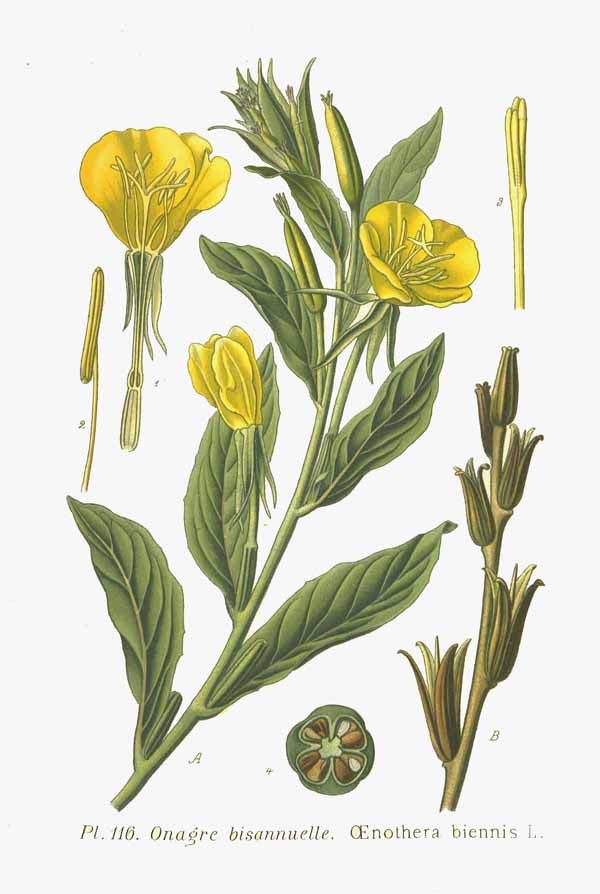
evening primrose,
borage and
black currant oils, to reduce inflammation, boost immunity and help maintain cell membranes in painful inflammatory disorders such as rheumatoid arthritis. In his study of people who suffer from this condition, GLA significantly improved the symptoms of joint tenderness and swelling in those who took it daily for six months.
Cat's claw, an herb that grows in South America and is described on page 105, not only enhances the functioning of the immune system, but also has been found to reduce inflammation. This herb is also used to treat rheumatoid arthritis—researchers have discovered that
cat's claw contains anti-arthritic compounds.
You may be surprised to find that the famous immune enhancer echinacea also serves as an anti-inflammatory. The same compound—hyaluronic acid—that protects cells from germ and viral invasion also lubricates your joints. Unfortunately, rheumatoid arthritis breaks down this acid.
Echinacea is an excellent herb to use for most inflammatory disorders for another reason: Many of them, including rheumatoid arthritis, are linked with immune system problems.
Guggul, a resin from a relative of the
myrrh tree, has long been used by practitioners of Ayurvedic medicine to fight pain resulting from inflammation. The results of one study showed that people experienced significant relief from their arthritic pain after three months of using a traditional Indian combination of
guggul,
turmeric, withania and the mineral zinc. One of the compounds responsible for the efficacy of this treatment is
curcumin, the active compound in
turmeric, the spice that makes
curry powder yellow.
In fact,
curcumin has been shown to be as effective as cortisone and phenylbutazone in decreasing inflammation. In one study with men who had surgery-related hernia, this compound reduced tenderness much more than the drug or a placebo. Like
cayenne,
curcumin contains pain relievers that stop the neurotransmitter substance P from sending its pain signals to the brain. It also works in several ways to decrease inflammation—by reducing prostaglandin activity. Researchers also believe that
curcumin increases cortisone's anti-inflammatory action by making the body more sensitive to this hormone. So the next time you sit down to a
curry dinner, consider that you are doing far more for your body than simply giving it a flavorful meal.
Other plants or plant compounds that have been compared to the anti-inflammatory drug phenylbutazone—but without the drug's long-term adverse effects—are Chinese skullcap, devil's claw and the compound lapachol from the South American herb
pau d'arco.
The Department of Antibiotics at the Federal University of Pernambuco in Recife, Brazil, has used this compound to develop an anti-inflammatory for use on the skin.
Research on Chinese
skullcap conducted in China and Russia has validated theories about its sedative action and ability to stabilize nerve-related heart problems. This herb, which is related to European skullcap, has also been favorably compared to anti-inflammatory drugs such as aspirin and ibuprofen. As is true of most pain relievers, the reasons for the effectiveness of Chinese
skullcap are not well understood. One thing we do know, however, is that it produces
no side effects.
The curiously named
devil's claw is so called because of the shape of its large fruit, which resembles a claw-like hand. In Europe, physicians give devil's claw as an injection, and it is also available as a tea and an external ointment for pain from inflammation. In southern Africa, this herb also has a long history of use for arthritis, rheumatic diseases, lower back pain and other inflammatory disorders.
Another important herb is
yucca. In one study, people with arthritis were divided into two groups: One group was given an extract derived from yucca; the other was given a placebo. Almost three times as many of those who took the yucca reported reduced swelling, pain and stiffness as those who took the placebo. Some of these people felt better in a matter of days; for others it took weeks and for some it took over three months. While other scientific investigations into the effects of
yucca on people show little action, herbalists have reported success in using it. This may be because the longest of these studies lasted only three weeks, and long-term use of the herb is generally necessary before any improvement is apparent. This proved true in a two-month study in France in which people with various types of arthritis took 1½ grams of yucca a day. About nine out of ten participants reported that the intensity of their pain decreased.
In this section, I have not mentioned external treatments for inflammation problems. For advice on liniments and muscle-relaxing oils that reduce swelling, see "Sprains and Strains" in chapter 100. In addition, herbs that increase circulation, such as
prickly ash,
ginkgo,
hawthorn and
gotu kola, can help increase the blood supply to an inflamed area, thus speeding the healing process.
Inflammation Pain Tincture
½ teaspoon each tinctures of
bupleurum root, ginseng root, licorice root, echinacea root, yucca root and turmeric (if available)
Combine ingredients. Take half a dropperful a few times a day or as needed. For long-term use, consult an herbalist.
~~~~~~~~~~~~~~~~
I have heard that dandelion also has a significiant amount of silisalic acid, IDK for sure, but wanted to mention this for me to look into asap.
As always this is not meant to be used as a diagnostic tool. I am only a layperson. Please seek counsel where necessary. They always know best. :D Cheers, Allison
P.S. I didn't have enough room to add all the labels. I can only use 200 caracters. So, I chose the ones that I use/like most and are in the most common name form. :D